
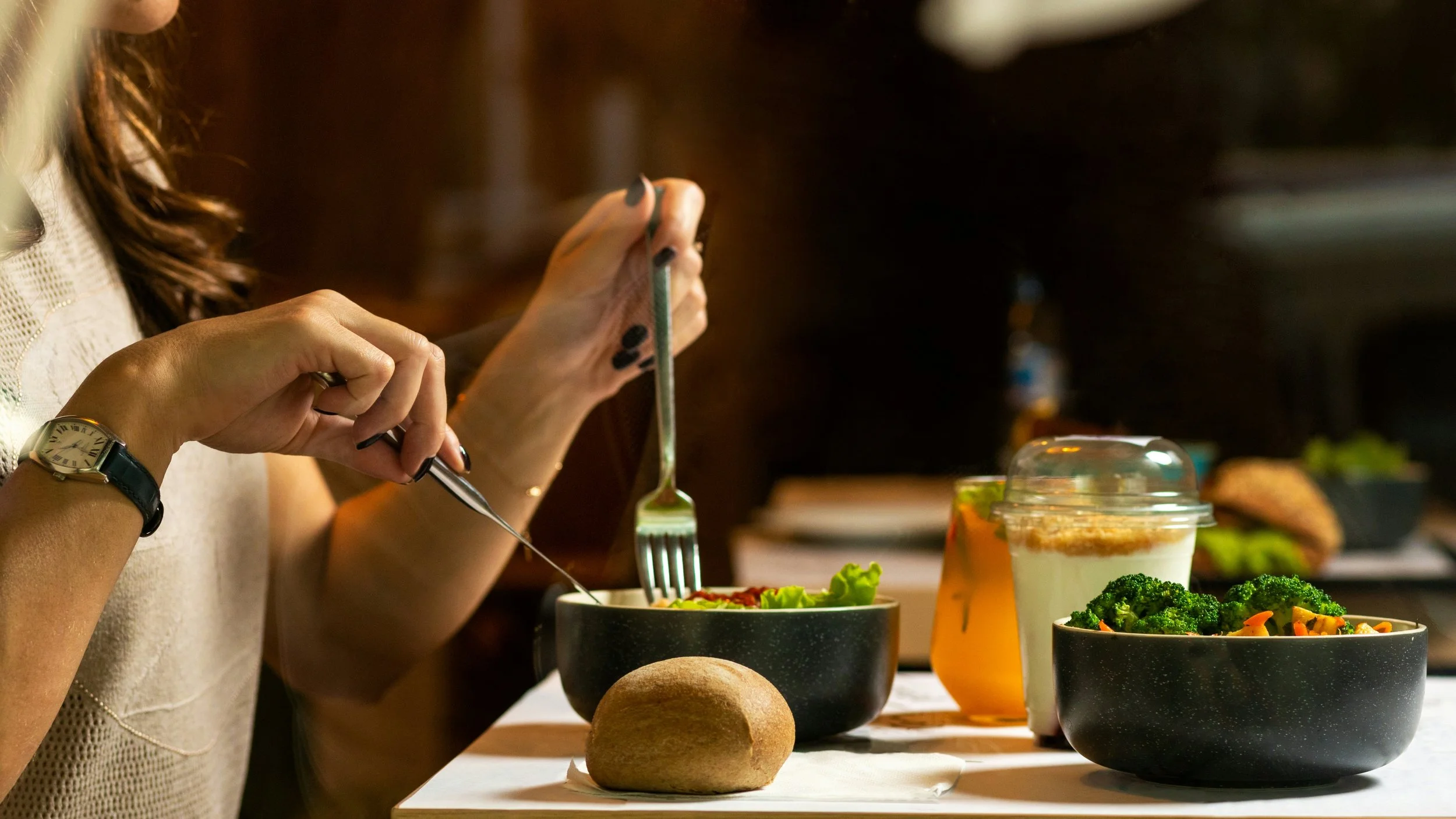
Local food done with a little intention is almost always the healthiest option on the menu.
The nutrition conversation around travel tends to go one of two ways. Either everything is permitted because you're on holiday, or you're tracking macros and hunting down the nearest salad bowl in a city that has never heard of one. Both approaches miss something.
Eating well on the road is simpler than either extreme suggests, and more pleasurable. It doesn't require discipline so much as a few consistent habits running quietly in the background while you get on with actually enjoying where you are.
Local Food Is Usually on Your Side
The instinct to seek out familiar healthy options in an unfamiliar city is understandable and almost always the wrong call. The local food, eaten with some attention, tends to be far better for you than anything imported or approximated.
Mediterranean cuisines are the obvious example. Grilled fish, legumes, olive oil, fresh vegetables prepared simply: this is naturally protein and vegetable forward eating, built around ingredients that are in season and local because that's what the kitchen has. You can eat brilliantly across Andalusia or Greece or Portugal and come home feeling like the food genuinely did you good, because it did. The same applies further afield. Japanese food is extraordinarily clean. Vietnamese food is vegetable dense. Thai food, eaten as it's actually eaten locally rather than in its exported form, is lighter than most people expect.
The goal is to eat what the place does well, with enough attention to make sure it covers what your body needs, rather than eating around the local food in search of something that fits a different template.
The Things Worth Being Deliberate About
Most of eating well on the road comes down to three things that are easy to deprioritize when the schedule is full and every meal is an occasion.
Protein. It keeps energy stable across long days of walking, sightseeing and back-to-back meetings, and it's almost always available if you're looking for it. Eggs at breakfast. Fish or grilled meat at lunch. Something substantial at dinner rather than defaulting to bread and a starter. This isn't about restriction. It's about not arriving at 4pm having run entirely on carbohydrates and wondering why the afternoon feels so heavy.
Vegetables. Available everywhere, often extraordinary when local and seasonal, and easy to crowd out when every meal is a celebration. Worth actively choosing rather than treating as an afterthought on a plate that's otherwise full.
Water. This is the one that consistently gets away from people on travel days. A full day of sightseeing in warm weather, moving between sites and restaurants and transport, and it's entirely possible to reach late afternoon having drunk almost nothing. The fatigue and the headache and the sense that the day has gotten harder than it should be: more often than not it's dehydration. Carrying a bottle and actually refilling it is the simplest health decision available on the road, and the one most easily forgotten.
The Balance Question
None of this is a case for eating carefully. The local wine is part of the experience. So is the dessert you didn't plan on, the long lunch that stretches into the afternoon, the thing from the market stall that doesn't fit any nutritional category but is exactly what the moment called for. Those are the meals you'll remember. They should be eaten without a second thought.
The framework underneath is light: protein and vegetables at most meals, water throughout the day, local food chosen with curiosity rather than anxiety. When those habits are running in the background you can say yes to everything else without it costing you anything.
MY HONEST TAKE
I've never come home from a trip feeling worse for having eaten well within it. The trips where I paid a little attention to what I was eating, without making it the point, are also the trips where I had the most energy, enjoyed the meals most, and arrived home feeling like I'd been somewhere rather than recovered from somewhere.
Eat what the place offers. Eat it with pleasure. Just make sure there's enough of the right things in the mix to keep you going.
The best travel nutrition plan is the one that lets you enjoy every meal. A little intention makes that easier, not harder.
What I Learned From Letting Someone Else Plan My Trip (And Whether I'd Do It Again)
Eating Well on the Road: How to Enjoy Every Meal and Still Come Home Feeling Good
EB
Eva Baczynska
June 20, 2025 • 8 min read
READ NEXT